

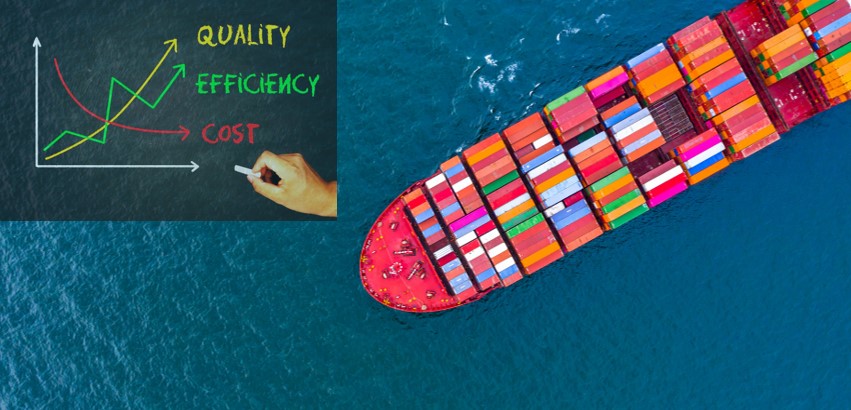
Optimization of the ship particulars under the customer's task
It is not a big secret that the proper cargo vessel is the biggest vessel that fits into existing navigation limits. Following this simple principle hardly you'll make a serious mistake. But, as is well known, the devil is in the detail. A good vessel doesn't mean the best vessel and a simple principle is not enough to define the most suitable parameters of the ship for your need.
The optimal characteristics of the ship for a certain customer's task or for a certain logistics route shall derive from the customer’s business model and existing limitations on the route. For determination of an optimal vessel parameters the physical principles, such as hydrostatics, hydrodynamics, and resistance of materials, shall be taken into account in tight junction with economic consignments like CAPEX, OPEX, and RoI.
The result of the calculations is the ship dimensions and other main particulars which makes the ship most efficient for a specific task. These include the overall dimensions and shape of the hull, cruising speed, power and type of propulsion system, deadweight, holds capacity, Class of the vessel, etc. The obtained particulars, as usual, form the initial basis for the design and construction order.
In case of the significant disproportion between optimal ship dimensions and navigation limits on the way, which is casual for the rivers and shallow, the barge trains or compound ships may be found as more suitable.
If you have a strong wish to pass this way on your own, then we could recommend reading our blog "A little about ship optimization". But the right decision is to call us for assistance. We will help you to analyze your task, then will define and prove the optimal parameters of the required fleet. Also, we will competently prepare a technical assignment for the design or technical requirements of a vessel to acquire.
In order not to be held hostage to the situation, which is typical for the new shipowners, we advise you to read our blog "the features of drawing up the technical specifications for different stages of ship design."
